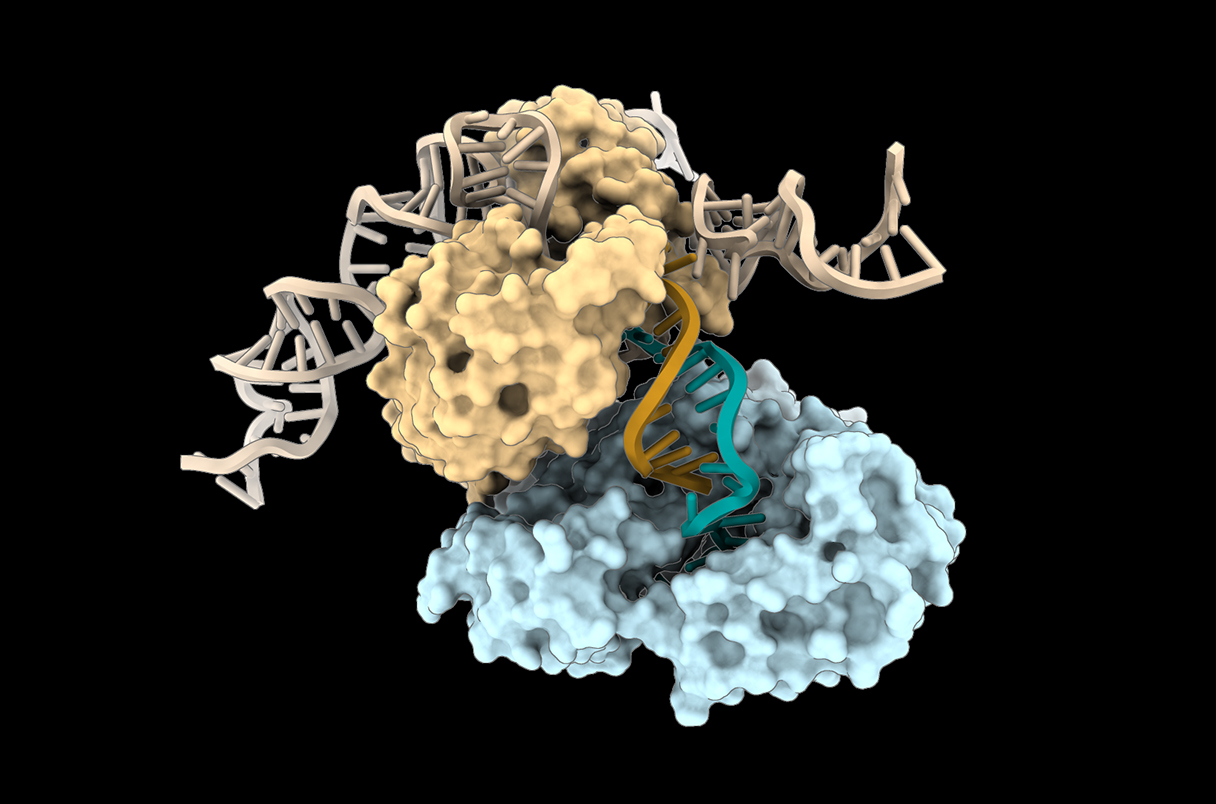
Scientists stunned by ‘fundamentally new way’ life produces DNA
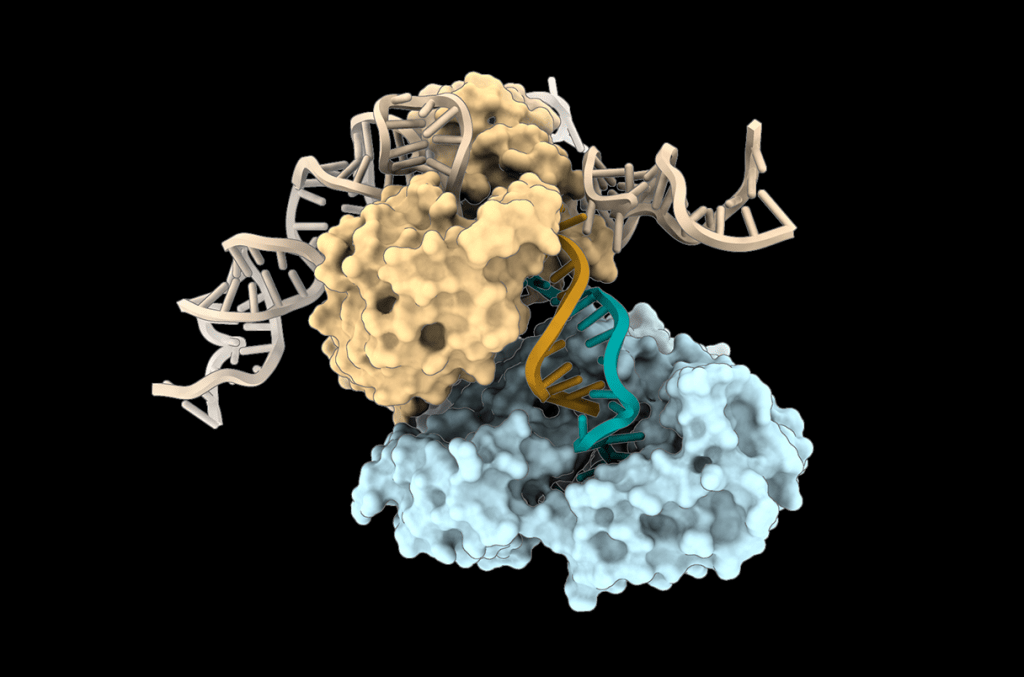
Protein-templated synthesis of dinucleotide repeat DNA by an antiphage reverse transcriptase
https://www.science.org/doi/10.1126/science.aed1656
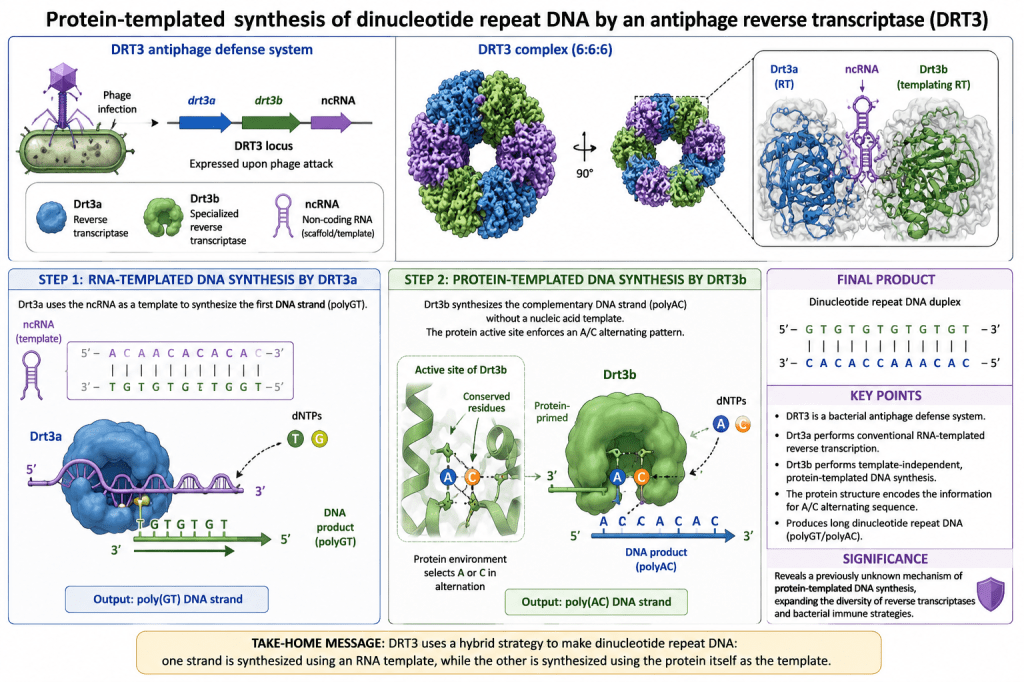
Abstract: Defense-associated reverse transcriptases (DRTs) are widespread bacterial anti-phage systems that use unconventional mechanisms of polynucleotide synthesis. We show that DRT3, which comprises two distinct RTs (Drt3a and Drt3b) and a noncoding RNA (ncRNA), synthesizes alternating poly(GT/AC) double-stranded DNA. Cryo–electron microscopy structures at 2.6 Å resolution reveal a D3-symmetric 6:6:6 complex of Drt3a, Drt3b, and ncRNA. Drt3a produces the poly(GT) strand using a conserved ACACAC template within the ncRNA. Notably, Drt3b synthesizes a complementary, protein-primed poly(AC) strand in the complete absence of a nucleic acid template, using conserved active site residues specific to Drt3b to enforce precise base alternation. These findings expand the functional landscape of nucleic acid polymerases, revealing a protein-templated mechanism for sequence-specific DNA synthesis.
For decades, biology textbooks have enshrined a simple rule: DNA is made by copying a template. After one enzyme unzips a DNA double helix into separate strands, another called a polymerase builds a complementary sequence, base by base, for each strand. Presto: two copies of the original DNA. But new research into how bacteria defend themselves from viruses now shows this synthesis rule isn’t absolute. Today in Science, a Stanford University team describes a bacterial enzyme that synthesizes DNA without a nucleic acid template, using its own structure as a guide.
“The research is groundbreaking,” says Philip Kranzusch, a biochemist at Harvard Medical School who studies bacterial defenses. “Pretty cool!” adds Adi Millman, a computational biologist at the Massachusetts Institute of Technology. The use of a protein as a template for DNA synthesis, she says, “is a meaningful conceptual shift from the classical central dogma,” in which information flows in one direction from nucleic acids like DNA to protein. Scientists hope the novel form of DNA synthesis can be adapted as a tool for basic biological research, much like the powerful genome editor CRISPR was developed from another bacterial defense system.