
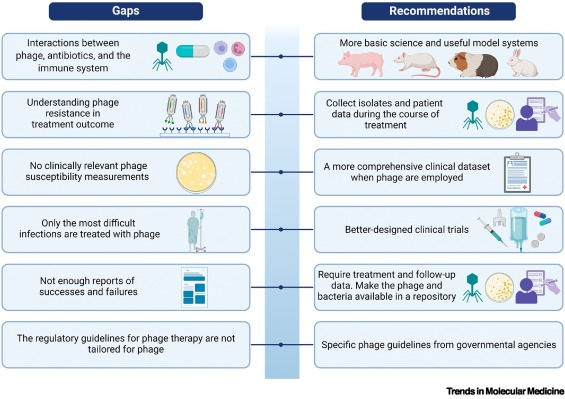
- Following a high-profile success in 2016, the field of phage therapy has been reinvigorated. Numerous biotechnology companies, academic groups, and hospitals are now developing and using phage to treat bacterial infections.
- Recently, several clinical trials and many personalised medical applications of phage have failed.
- Because of a lack of basic science, the reasons behind when and why phage therapy for infections fails, indeed when and why it succeeds, are not understood.
- The regulatory framework governing the use of phage for the treatment of infections is not amenable to the development and expansion of phage therapy.
Fueled by the increasing abundance of antibiotic-resistant pathogens, there has been a resurrection in using bacterial viruses (bacteriophages or ‘phage’) for therapeutic applications. Phage therapy was used in the early 20th century to limited success, which we attribute to its haphazard employment. To avoid repeating past mistakes, this Opinion first evaluates the historical reasons for the failure of phage therapy, analyzes the current state of the field, and ultimately makes recommendations for how to proceed with contemporary phage therapy. Despite many advances in phage biology, crucial gaps in our knowledge persist. Our recommendations require physicians, scientists, and public-policy leaders to cooperate to bridge the outstanding gaps around phage therapy to develop phage into a useful therapeutic tool.
https://www.sciencedirect.com/science/article/pii/S147149142500084X
 PHAGElogist