
Some interesting discoveries on anti-defence systems;
- Diverse anti-defence systems are encoded in the leading region of plasmids
- Two defence systems eliminate plasmids from seventh pandemic Vibrio cholerae
- An antiplasmid system drives antibiotic resistance gene integration in carbapenemase-producing Escherichia coli lineages
Diverse anti-defence systems are encoded in the leading region of plasmids
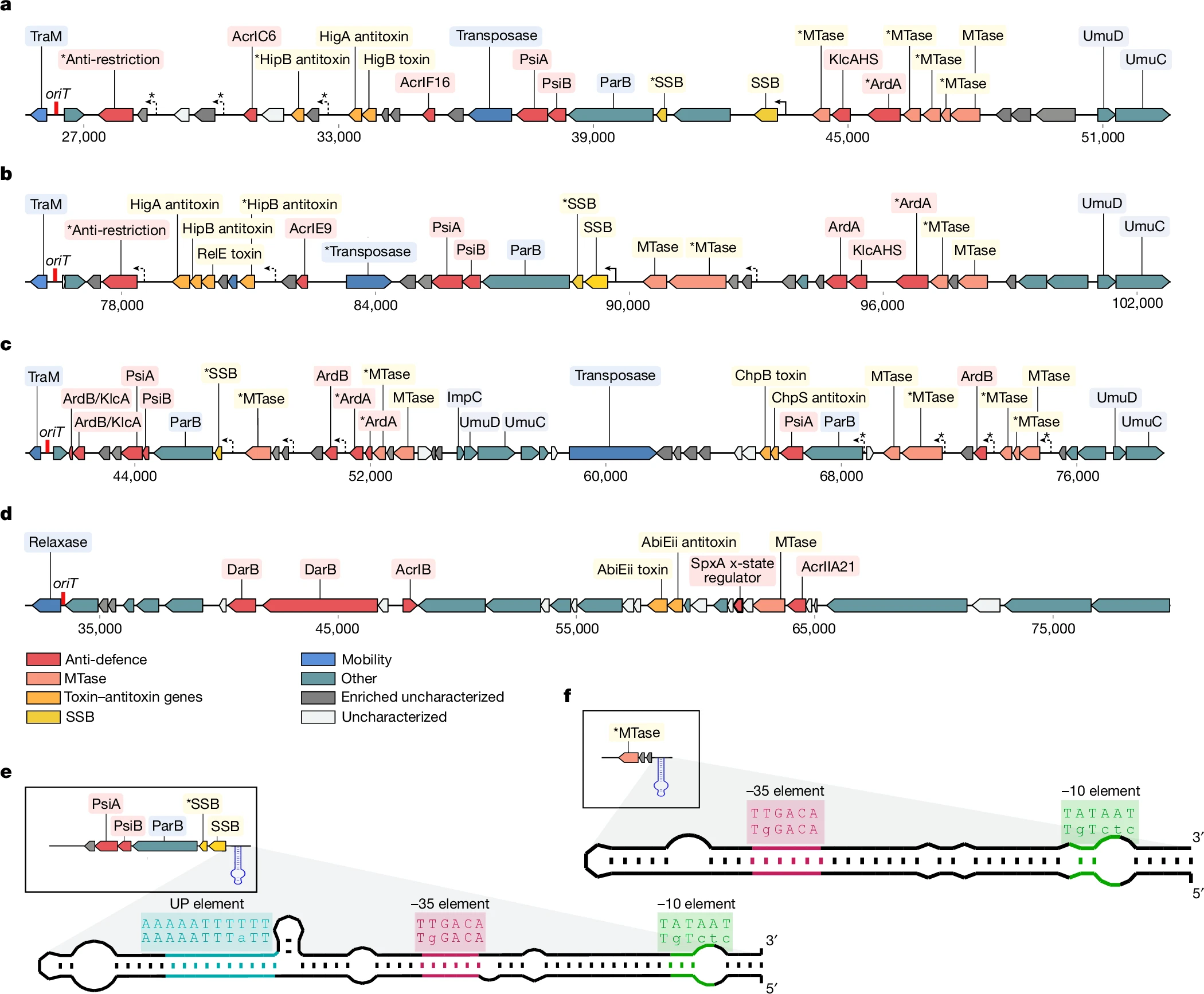
Plasmids are major drivers of gene mobilization by means of horizontal gene transfer and play a key role in spreading antimicrobial resistance among pathogens. Despite various bacterial defence mechanisms such as CRISPR–Cas, restriction–modification systems and SOS-response genes that prevent the invasion of mobile genetic elements, plasmids robustly transfer within bacterial populations through conjugation. Here we show that the leading region of plasmids, the first to enter recipient cells, is a hotspot for an extensive repertoire of anti-defence systems, encoding anti-CRISPR, anti-restriction, anti-SOS and other counter-defence proteins. We further identified in the leading region a prevalence of promoters known to allow expression from single-stranded DNA, potentially facilitating rapid protection against bacterial immunity during the early stages of plasmid establishment. We demonstrated experimentally the importance of anti-defence gene localization in the leading region for efficient conjugation. These results indicate that focusing on the leading region of plasmids could lead to the discovery of diverse anti-defence genes. Combined, our findings show a new facet of plasmid dissemination and provide theoretical foundations for developing efficient conjugative delivery systems for natural microbial communities.
 PHAGElogist