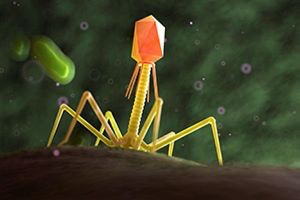
Antibiotics have been hailed as a “miracle drug” since the discovery of penicillin in 1928, but now, more bacteria are developing resistance to antibiotics. In 2019, the United Nations estimated nearly 5 million deaths were associated with antimicrobial resistance, and that number is expected to double by 2050. On the next episode of ‘Vital Signs’, CNN Chief Medical Correspondent Dr. Sanjay Gupta speaks to researchers exploring the use of phages, a naturally occurring virus that destroys bacteria, to see if they can be used as an alternative treatment method for antimicrobial resistant infections.
Dr. Gupta joins epidemiologist Steffanie Strathdee on a hunt for phages in some unlikely locations. Strathdee shares how she turned to phages when her husband fell ill after contracting a superbug infection while on a vacation in Egypt. She tells us how her desperate search for an alternative treatment led her and her colleagues to open the Center for Innovative Phage Applications and Therapeutics at the University of California San Diego, where they focus on studying alternative treatments like phage therapy to fight antimicrobial resistant diseases.
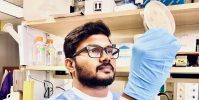
The challenge with phage therapy is that there are trillions upon trillions of phages in the world and finding the right one for a specific infection is essentially searching for a needle in a haystack. CNN meets Biologist Graham Hatfull at the University of Pittsburgh who has built a library of 23,000 phages. He explains how this resource could speed up the process of identifying which phages could be used as therapeutics. Hatfull also helped launch the SEA-PHAGES program in 2008 to encourage more students around the world to hunt for their own phages. To date, 45,000 students have taken part in the program.
CNN also speaks to Heather Kilar, who had contracted an antibiotic-resistant form of Mycobacterium Abscessus in her ear which was hindering her quality of life. After taking an extensive antibiotic regiment with little to no improvement, she began searching for alternatives, leading her to phage therapy. With two self-administered doses daily, Kilar’s body appears to be reacting to the therapy positively, and she says she has experienced no side effects.
Finally, CNN travels to Thailand to discover how phage researchers are collaborating on a global scale. Vorrapon Chaikeeratisak, Assistant Professor in Biochemistry at Chulalongkorn University in Thailand and his students are on the hunt for phages not just to treat infections but to prevent infection from happening at all. As part of the Thai Fish Project, Chaikeeratisak’s lab found two phages to help protect shrimp from infection, thereby protecting one of the country’s main food exports. He explains how phages could be a potential alternative to using antibiotics in aquaculture.
Vital Signs trailer: https://bit.ly/3T4pNsZ
Vital Signs images: https://bit.ly/4141YU0
Vital Signs microsite: https://cnn.it/34AHmXX
 PHAGElogist