After Ryland ‘Ry’ Young retires on Aug. 31, his students can keep an ear out for his signature jangling of keys in the hallways — the renowned faculty member will still manage his lab, as professor emeritus.

Young, Ph.D., is the director of the Texas A&M Center for Phage Technology, a University Distinguished Professor, Regents Professor and the Sadie Hatfield Professor of Agriculture in the Texas A&M Department of Biochemistry and Biophysics.
Over his 44-year career at the Texas A&M College of Medicine and College of Agriculture and Life Sciences, Young has made broad advances in the understanding of bacteria-infecting viruses called bacteriophages, or phages. This work was performed in collaboration with many students and colleagues. Overall, Young’s work illuminated the ancient “arms race” between phages and bacteria and shed light on ways to combat antibiotic-resistant bacterial infections.
“I can’t overstate the impact Dr. Young has had on his field, generations of students, this department and the reputation of the university,” said Josh Wand, Ph.D., distinguished professor and head of the Department of Biochemistry and Biophysics. “We want the department to remember him and celebrate those achievements, so we are starting a new endowed lecture series in his honor.”
The Ryland F. Young III Lecture in Biochemistry endowment will support bringing preeminent experts in biochemistry and biophysics to speak at Texas A&M. Donations to the endowment will be accepted for the next five years. The Department of Biochemistry and Biophysics will provide up to $12,500 in matched donations for gifts of $500-$12,500.
Learning about biology from phages
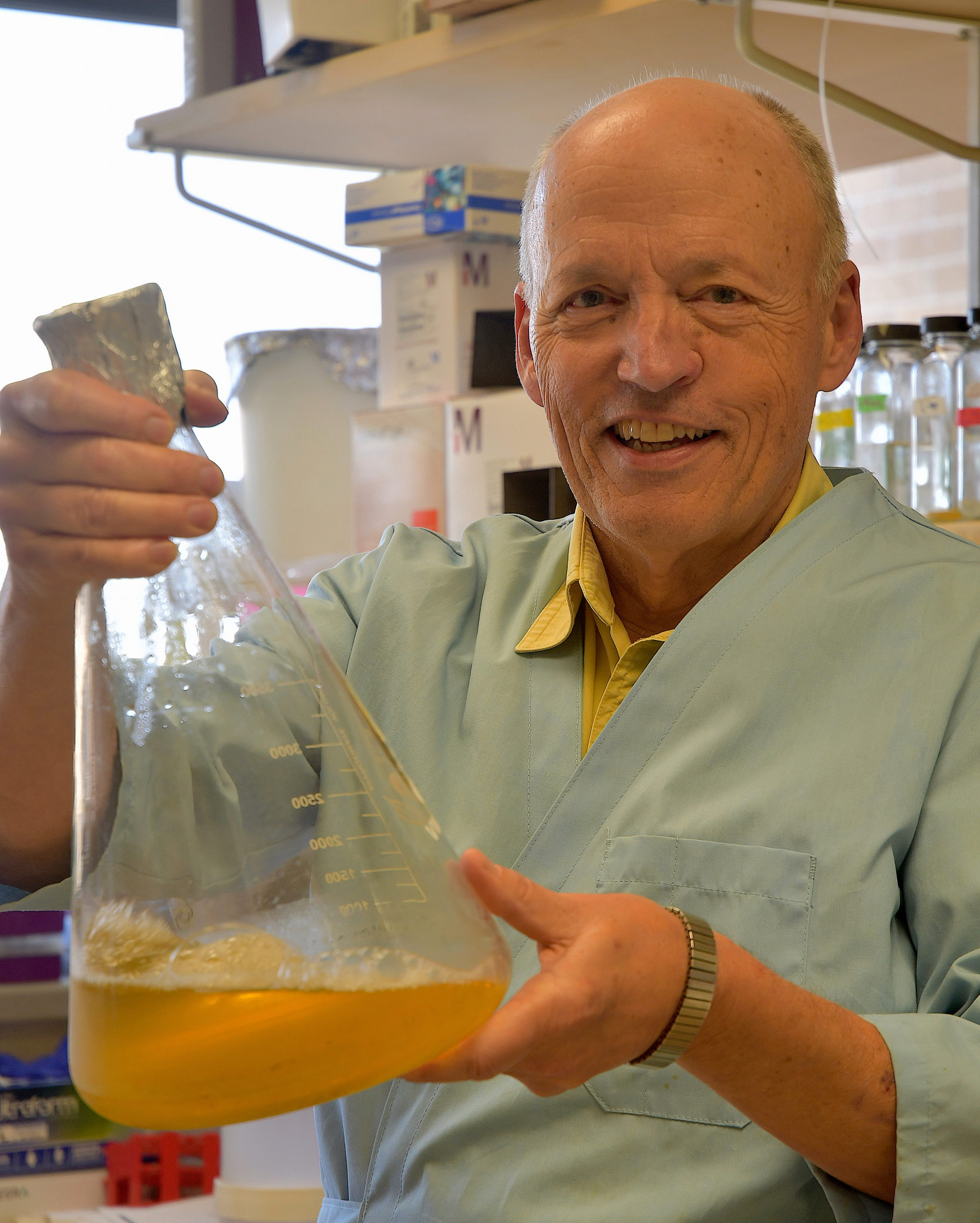
Since starting his faculty career in 1978, Young has focused his work on phages, which have been used to treat or prevent bacterial infections and have also served as an important model organism in biology.
“Phages have about 100 times less genetic material than an average bacterial cell, which has 10 times less genetic information than an average eukaryote,” Young said. “Phages are ‘byte-sized.’ They are easy to manipulate and grow, so it’s easier to ask questions and get definite answers. Most of the time, when you have a hypothesis, it’s wrong — that’s just the nature of science — but it’s nice to find that out quickly.”
After many genetic questions were answered about phages decades ago, interest in using these viruses as model organisms faded in the scientific community. Young watched his field flourish again in recent years when phages offered new ways to control antibiotic-resistant bacteria and opened many questions about gene editing.
New frontiers in gene editing and the phage-bacteria “arms race”
To defend against phages, bacteria have evolved ways to recognize and inactivate phage DNA. When scientists employ the gene-editing tool CRISPR, they are borrowing tricks from the bacterial defense manual against phages.
“The hot news is that phages came up with all kinds of ways of fighting back,” Young said. “Phages came up with many different ways of defeating or taking over the CRISPR systems. Some even turn it around and use CRISPR against other phages.
“If you want to use CRISPR, there are phage proteins to control it, amplify it, slow it down or change its specificity,” he said. “It’s an incredible biological story, an evolutionary story of attack and defense.”
Center for Phage Technology to grow over next five years
In 2010, Young became a founding member and director of the Center for Phage Technology. The center’s mission is to position the Texas A&M University System as a world leader in the application of phages to combat bacterial infections in humans, animals and plants; promote food safety; protect against potential bacteriological weapons; and to prevent or mitigate harmful effects of bacterial contamination, degradation and corrosion.
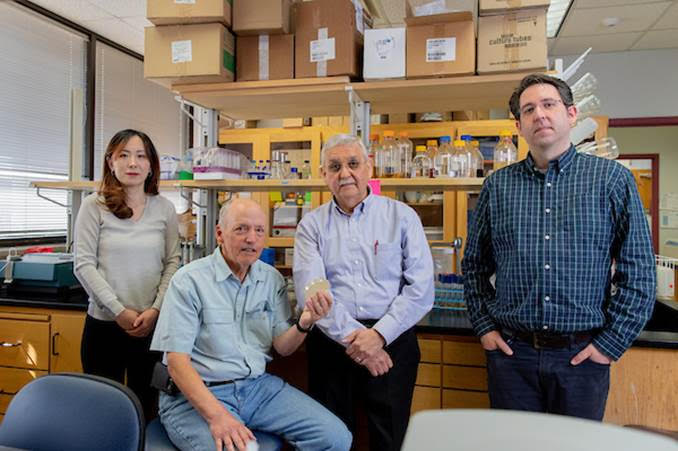
“The Center for Phage Technology just went through a five-year review, and we’ve been authorized for another five years,” Young said.
The center currently includes seven principal investigators as well as students, staff and scholars. Now, its leadership team plans to expand the center’s membership, Young said.
For example, “bacterial cell biology is phage biology too. Anyone who works on bacteria is part and parcel of the same story,” Young said.
 PHAGElogist