
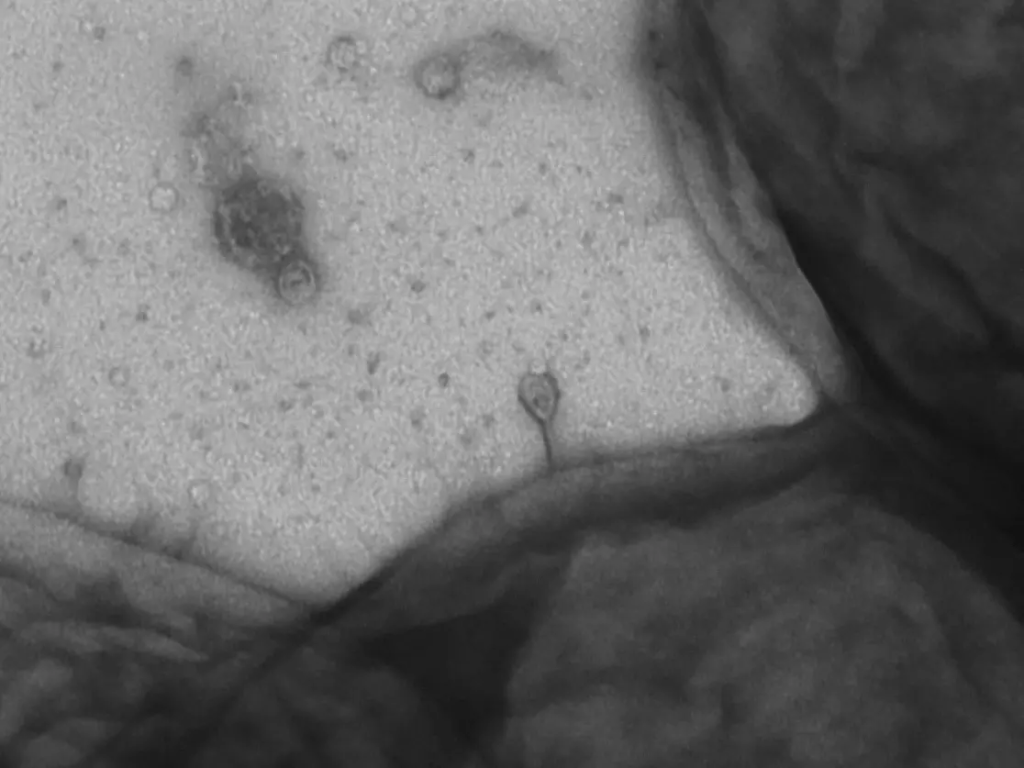
Antibiotic resistance is responsible for the deaths of around 700,000 worldwide every year, with the number expected to reach 10 million by 2050, exceeding the number of annual deaths by cancer now. Antibiotic resistance is one of the biggest threats to public health, as resistant bacteria can turn into otherwise harmless infections such as pneumonia, into deadly ones. Researchers have identified over a thousand types of bactericidal viruses in human intestines, known as phages, that can be used to fight antibiotic resistance. The researchers used cutting edge artificial intelligence technology to identify viruses, which proved superior to other available methods that are more time consuming and require the isolation of each individual phage.
First author of the paper, Joachim Johansen says, “Phages are by nature designed to infect bacteria, which makes them the ultimate weapon to fight dangerous bacteria that do not respond to antibiotics. The new AI-based method has enabled us to identify more than 1,000 different types of phages quickly and efficiently.” Phages have another advantage apart from being able to fight antibiotic resistance; they may have fewer side effects. Most antibiotics are broad-spectrum, which means that they are indifferent about which bacteria they kill, and can decimate populations of beneficial bacteria as well. Regimens of antibiotics can destroy the gut microbiome for example, causing long-lasting, debilitating consequences.
Simon Rasmussen who led the research says, “Phages only eliminate the one bacterium they are known to infect. This makes them extremely clever. The problem with antibiotics is that they can kill all microorganisms in the intestines, and this is not desirable. Because killing intestinal bacteria will change the composition.” A healthy balance of phages and beneficial bacteria in the gut microbiome is essential for other systems and processes in the body, including the immune system, hormone production, digestion, energy levels, mood and the experience of pain. Rasmussen says, “When you suffer a serious infection and receive antibiotic treatment, we know that it may impact other diseases. For example, the risk of developing mental illness increases every time you are admitted with an infection and receive antibiotic treatment. It is hard to say, though, whether it is a result of the infection or the antibiotic treatment.”
While phages were discovered in the 1920s by microbiologist Felix d’Herelle, after the discovery of penicillin in 1944 by Alexander Fleming, research into phages was put on the backburner. However, in the light of the emergence of antibiotic resistance, scientists are investigating bacteriophages as an alternative treatment for bacterial infections. Johansen says “The method we have developed is fairly easy to use. We therefore hope is will become widespread. At any rate, it holds great potential when it comes to analysing all the faeces samples collected using the new method. This way, we are able to collect lots of DNA data fast and start identifying even more phages.” The researchers stress that antibiotics are the best available treatment for bacterial infections.
 PHAGElogist