Each year, about 2.8 million Americans get bacterial infections that resist treatment by the antibiotics designed to knock them out. About 35,000 of those patients die – globally the mortality figure is 700,000. Projections are that by 2050, 10 million people will die every year due to antimicrobial resistance, making this one of the world’s biggest threats to health, food security and development.
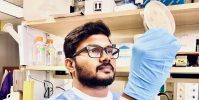
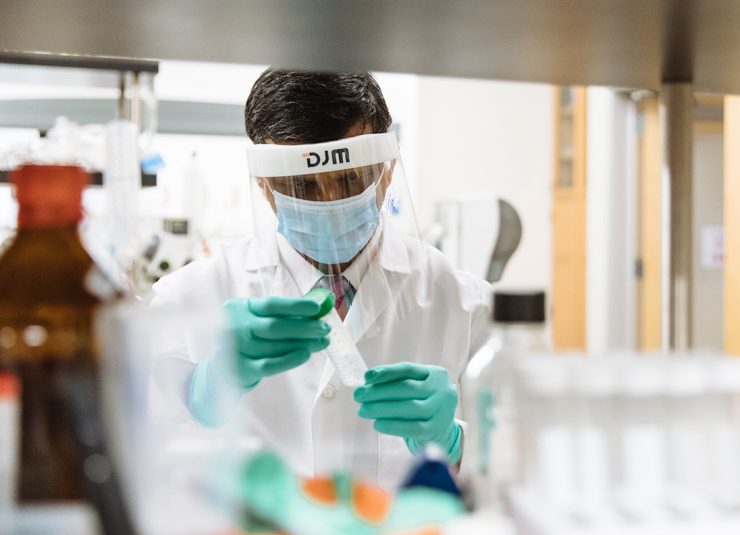
Keykavous Parang, Pharm.D., Ph.D., has seen these daunting numbers from the U.S. Centers for Disease Control and Prevention, and they motivate him to pursue breakthroughs in his research lab at Chapman’s Rinker Health Science Campus in Irvine. Parang is among the Chapman researchers working on high-level projects to address the growing threat of antibiotic resistance.
One of Parang’s colleagues – Rakesh Tiwari, Ph.D. – works alongside him in the lab they share at the Chapman University School of Pharmacy. The team also includes Jason Yamaki, Pharm.D., Ph.D., who works with patients fighting bacterial infections.
Collaboration is critical, Parang says.
“I’m a medicinal chemist who can synthesize a lot of active antibacterial agents, but I benefit greatly from having an infectious disease expert to evaluate further the active compounds developed at my laboratory in the preclinical and clinical setting,” he says.
Team science helps promising research projects escape what Parang calls “the valley of death.”
“You can make a lot of active compounds, but if circumstances aren’t there for strong partnership, you won’t be able to make an impact with them,” he says, noting that the chain extends to include pharmaceutical industry funding and marketing support. “There’s a link between the team approach and successful opportunities for impact.”
Exploring How Cells Adapt to Unique Stresses
Joining the overall Chapman team working to combat antibiotic resistance is Michael Ibba, Ph.D., a microbiologist and the new dean of Schmid College of Science and Technology. Ibba arrived at Chapman this summer from Ohio State University, where he chaired the Department of Microbiology and led a research lab that is moving to Chapman. He and his team will continue work Ibba started two decades ago, exploring molecular mechanisms and how cells adapt to different stresses. Included in those stresses is the challenge faced by bacteria when confronted with an antibiotic sent to destroy them.
“Like any other evolutionary process, if you put a challenge in front of cells, it’s adapt or die,” says Ibba, who was associate director of the Infectious Diseases Institute and co-director of the National Institutes of Health’s Cellular, Molecular, and Biochemical Sciences Training Program at Ohio State. “That’s why when you look at a prescription, it says to make sure you take the full course of the antibiotic. You’ve got to get rid of all the bacteria cells, some of which might have already started to develop resistance.”
Using Peptides in Combination with Existing Antibiotics
Students will continue to play important roles as the researchers take the next steps with their peptide platform.
“We’ll be looking at synergistic activity with other antibiotics and antivirals,” Parang says. “With a combination of antibiotics, the bacteria have less chance to retain resistance; we can target different events in the life cycle of the bacteria. If they have resistance to one compound, they may still be sensitive to another.”
By early 2021, the Chapman researchers hope to have filed an Investigative New Drug application with the Food and Drug Administration for human trials.
“One interesting aspect is that while we have been targeting bacteria, some of the peptides are active against coronavirus because of their antiviral properties,” Parang says. “That’s another avenue we are pursuing.”
These days, research labs like the ones on Chapman’s Rinker Health Science Campus are more important than ever. Because of the high costs of shepherding new antibiotics from lab to market and low profit margins as patients were treated quickly, some pharmaceutical companies abandoned developing new antibacterial agents in the 1980s, Parang says.
But that’s changing.
“Large and small pharmaceutical companies are coming back to the effort because of the scale of the problem,” he says. “They know there will be a huge market priority in the coming years.”
Research by Parang and Tiwari has received funding from AJK Pharmaceuticals, but the pair are pursuing further support as they prepare for the possibility of navigating multiple phases of trials.
 PHAGElogist