
Restricting the use of antibiotics may not be enough to curb the spread of resistant bacteria, suggests new research in mice. Efforts will also have to focus on preventing infections by the superbugs in the first place.
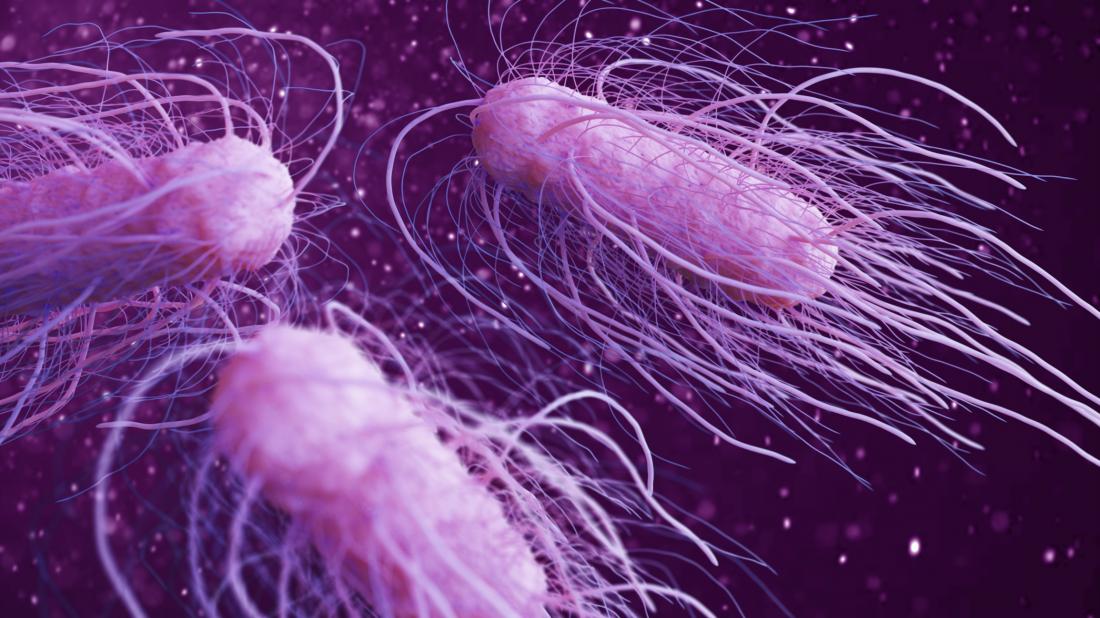
New experiments in mice reveal novel mechanisms by which drug resistant forms of Salmonella, shown here, can spread.
These were the conclusions that scientists at ETH Zurich in Switzerland came to after identifying a previously unknown mechanism of antibiotic resistance spread in bacteria that inhabit the gut.
A recent Nature paper describes how, using mice, the team discovered the mechanism in persisters — persistent bacteria that can survive treatment with antibiotics by going into a dormant state.
“If you want to control the spread of resistance genes,” says co-senior study author Médéric Diard, “you have to start with the resistant microorganisms themselves and prevent these from spreading through, say, more effective hygiene measures or vaccinations.”
Until recently, Diard was working at ETH Zurich. He is now a professor at the University of Basel, also in Switzerland.
According to the World Health Organization (WHO), antibiotic resistance is a public health concern in every country.
In the United States, at least 2 million people develop antibiotic resistant infections each year, and at least 23,000 die from them, according to the Centers for Disease Control and Prevention (CDC).
 PHAGElogist